
Recent Posts
Wall Sawing vs. Wire Sawing: Choosing the Right Diamond Cutting Method
November 21, 2026
How Diamond Blades Make Precision Concrete Cutting Possible
November 21, 2026 The work of heavy civil demolition, structural modification, and underwater cutting requires extreme precision, which is impossible to achieve with conventional percussive jackhammers. The disadvantages of jackhammers are that they cause micro-fractures, excessive dust formation, and vibration to structures, but industrial diamond cutting avoids all these problems.
In the case of complicated penetrations through highly reinforced massive concrete, contractors need to choose from two different options: the tracked circular cutting system and the cable looping system.
How Each System Cuts Concrete
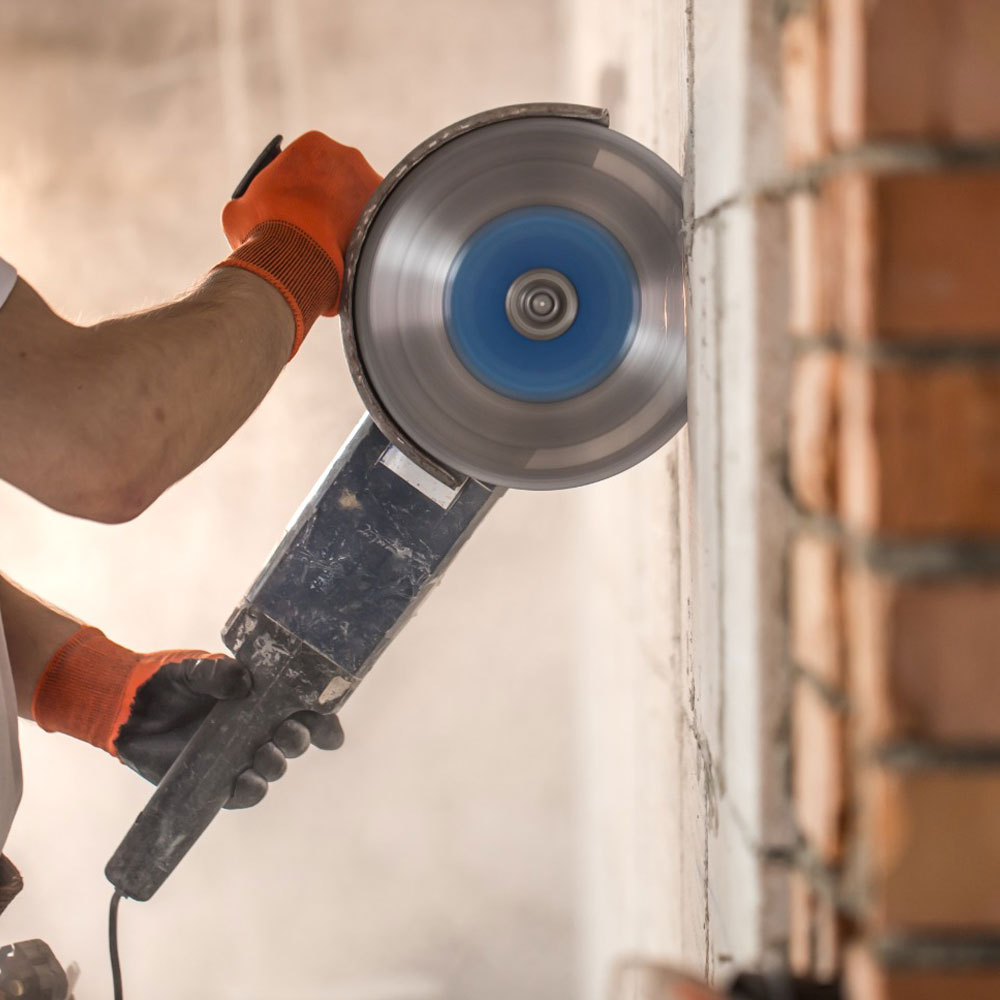
The major difference is with regard to the shape and movement of the cutting tool. In wall sawing, a rigid diamond circular blade is attached to a guide rail that is fastened to the surface. The cutting is done by a powered head that moves the blade along the guide rail. As the blade is circular, access to the blade is needed, and therefore the depth of cut is determined by the blade’s diameter and is limited to about 700mm to 1000mm.
In wire sawing, the diamond blades’ size limitation is completely ignored. Unlike the diamond blade that is rigid, in wire sawing, the cutting device consists of a looped steel cable that is coated with electroplated diamond beads. The continuous cable is moved through the structure with high-torque pulleys.
Operational Differences on the Jobsite: Wall Sawing vs. Wire Sawing
- Restrictions in Thickness and Dimensions: Wall saws are ideal for conventional dimensions such as wall openings, slab openings, and parapets, whereas wire saws can cut thick walls of many meters in height, bases of machines, and bridge piers.
- Surface Setup and Geometry of Cutting Path: Track-mounted wall saws offer perfectly straight, square cuts on horizontal, vertical, and highly inclined surfaces. Wire saws can cut non-linear and curved surfaces, as well as large bulk sections.
- Preventing Overcutting of Intersection Points: Wall saws will definitely make an overcut at intersection points unless relief core drilling is done to eliminate this problem, whereas wire saws do not create overcut at intersection points.
- Underwater Operations and Hazardous Locations: Wire cutting systems work well in subsea and underwater operations such as underwater harbor wall repairs, submerged piles, and intake shafts since, in this case, only the diamond wire is placed underwater and the drive motor remains topside.
Application Matrix: Matching Tooling to Project Scope
Selecting the wrong one leads to increased jobsite cost and time delays. Wall sawing is the preferred technique for precision cutting in commercial buildings where plumb tolerances must be achieved: cutting door openings, HVAC ventilation cut-outs, elevator shafts, and expansion joints in precast panels.
Wire sawing becomes the technique of choice when weight, space, and environmental conditions dictate that round diamond sawing is out of the question. Wire sawing is the preferred method for cutting thickly reinforced concrete foundations, dismantling thick machine plinths, cutting bridge abutments, and cutting underwater marine piles where divers or remotely operated robots control the wire cutting process.
Concrete Cutting UAE: Specialized Demolition and Marine Cutting Engineering
Dismantling of highly reinforced concrete without creating vibrations on site involves using heavy-duty diamond tools. Through Concrete Cutting UAE, engineering firms in the Emirates have access to commercial diamond cutting services that are suitable for complicated above-ground and sub-aquatic operations. They use sophisticated track-mounted wall saws and deep-diving underwater diamond wires to carry out intricate cutouts, precise sections, and mass concrete dismantling.
FAQs
Do wall saws damage structural integrity through vibration?
No. Both diamond wall sawing and wire sawing are non-percussive, non-vibrational methods that leave remaining structural concrete entirely intact without causing internal micro-cracks.
How is dust managed during indoor diamond cutting operations?
Both cutting methods continuously introduce water to lubricate diamond beads, cool the cutting interface, and flush away waste as a manageable, low-hazard slurry with zero airborne silica dust.
Conclusion
While both methods give you non-destructive removal with no vibrations, their applications on site can differ greatly. Track-driven wall saws give you precise edges, laser-straight on normal walls and architectural slabs, while flexible diamond wire systems tackle deep mass foundations, massive civil structures, and even underwater marine cuts. Working alongside the experts at Concrete Cutting UAE will guarantee that you get the right mechanical cutting system for your job.