
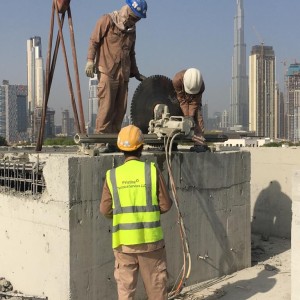
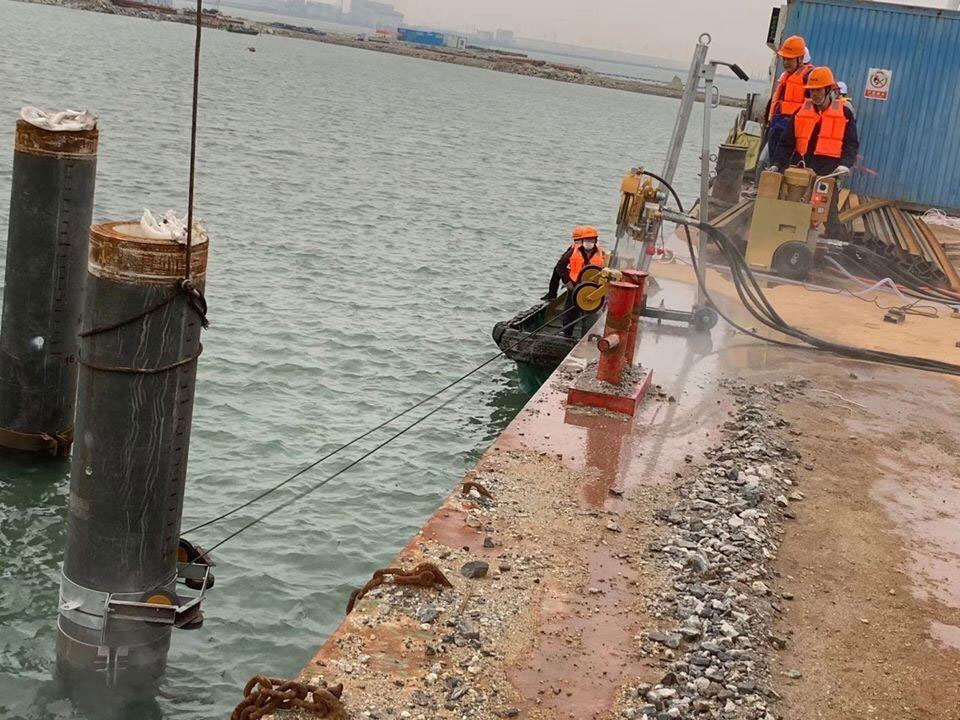
The construction of subsea engineering projects requires highly precise methods that can resist extremely high hydrostatic pressure, poor visibility, and tidal currents. The use of special underwater concrete cutting techniques enables safe modification and demolition of ports, bridges, dams, and offshore structures without jeopardizing other marine structures nearby.
The Engineering Behind Subsea Demolition
The underwater construction and civil engineering environment has some of the toughest operating conditions anywhere in the world. In cases where bridge piers, quay walls, intake pipes, or offshore oil and gas structures need to be altered in any way, normal demolition methods on land using equipment such as jackhammers or hydraulic breakers become totally impractical.
Vibration caused by too much impact in the water environment will lead to micro-fracturing of the surrounding structures, damage to sea life in the vicinity, and even the creation of shock waves capable of injuring commercial diving teams. Underwater concrete cutting technology takes care of all these problems by substituting impact for precision diamond abrasion technology.
The Core Technology: How Diamond Wire Sawing Excels Subsea
Among the various subsea cutting techniques available, diamond wire sawing represents the industry benchmark for deep-water and marine applications:
- Variable Wire Configurations Without Depth Limits: Diamond wire cutting uses multi-stranded cables with industrial diamonds embedded in them and runs the cable through a series of submersible guide pulleys. This configuration enables operators to encircle the wire around pilings, caissons, or large underwater foundations that can have almost any shape or depth.
- Smooth Section Cuts Without Vibrations: Since the wire performs cutting by continuous abrasive grinding of diamonds, it makes smooth cuts without producing vibrations in a structure being cut.
- Safety Improvements for Diving Personnel and Remotely Operated Vehicles: The hydraulic drives for driving diamond wire cutting are always located either on top of barges or in submersible enclosures. This allows diving personnel to set up wire and move to safer areas from which to perform the cut.
Key Applications in Maritime and Coastal Infrastructure
Subsea cutting methods are essential across a wide spectrum of maritime rehabilitation, salvage, and demolition projects:
- Expansion of Port, Harbor, and Jetty: Modification of berths, reduction of jetty pile support structures, and removal of damaged sections of quay walls in order to be able to receive larger cargo ships in deeper draft channels.
- Rehabilitation of Bridge Piers and Repair of Scour: Reduction of jacket, footing, and bridge pier structures below water level in rehabilitation and seismically reinforced bridges.
- Upgrading Dams and Hydropower Plants: Underwater removal of intake gates, penstocks, flow control baffles, and spillways without the need for complete drainage of reservoirs.
- Offshore Decommissioning & Wreck Removal: Cutting of offshore pipelines, wellheads, and platforms in offshore oil and gas decommissioning and shipwreck removal operations.
Concrete Cutting UAE: Specialized Subsea Cutting Solutions
To perform intricate cutting operations in the sea, certified commercial divers, hydraulic engineering skills, and submersible equipment are required. Providing its services in Dubai, Abu Dhabi, Sharjah, and the neighboring waters, Concrete Cutting UAE offers Underwater Concrete Cutting services tailored to meet requirements in the aquatic environment.
Concrete Cutting UAE uses industrial diamond wire saws and submersible core drills powered by high-pressure marine hydraulic power packs. Using competent underwater technicians and HSE policies, Concrete Cutting UAE performs a wide range of activities, including cutting piles of submerged docks and jetty piles, cutting pipelines underwater, and so forth.
FAQs
- Can underwater concrete cutting be controlled without human divers?
Yes. In deep-water or hazardous marine environments where human diving is restricted, wire sawing assemblies and clamping jigs can be mounted, tensioned, and operated remotely using Remotely Operated Vehicles (ROVs).
- Why is diamond wire cutting preferred over blasting or hydraulic breakers underwater?
Hydraulic breakers and explosives generate massive underwater pressure shockwaves that threaten marine ecosystems, disrupt nearby vessel traffic, and risk cracking adjoining structural foundations. Diamond wire cutting is completely vibration-free, non-explosive, and dimensionally precise.
Conclusion
The maintenance of subsea structures and marine demolition is a task that requires specific tools designed to work in high-pressure environments. Using diamond wire instead of percussive methods allows marine engineers to cut reinforced concrete structures precisely without any risk of causing micro-fractures. Working together with renowned marine cutting companies such as Concrete Cutting UAE will ensure technical excellence in your marine, port, and offshore developments.